Similar Games: The Nuance of Choice at Your Table
Navigating the subtle distinctions between seemingly identical tabletop games requires a keen eye for design. This deep dive explores how mechanical crunch and thematic fluff shape vastly different play experiences.
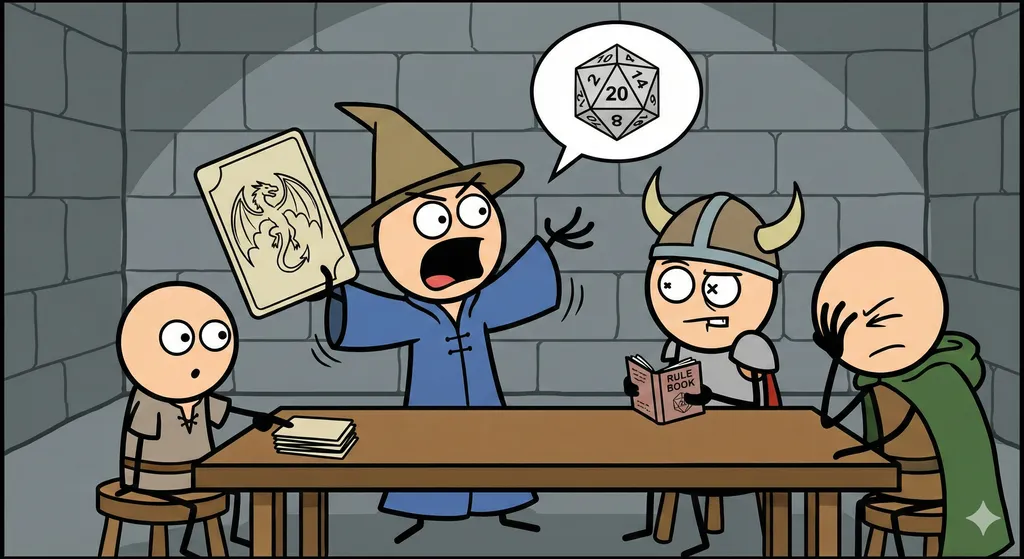
The age-old conundrum of 'which one?' when faced with two strikingly similar tabletop games – a challenge recently explored by the insightful Tabletop Bellhop Gaming Podcast Episode 301 – is not merely a matter of taste; it’s a profound examination of design intent and player experience. As veteran GMs, we've all been there: a player asks, "Should I play *Game A* or *Game B*? They look identical." The truth, as always, lies in the crunch and the fluff, and how those elements coalesce to create a unique table feel.
Let’s dissect the mechanics first, the very bones of any system. Consider the enduring debate between Dungeons & Dragons 5th Edition and Pathfinder 2nd Edition. On the surface, both are high-fantasy, d20-based TTRPGs centered on adventuring parties. Yet, their core mechanical philosophies diverge wildly. Fifth Edition embraces simplicity and narrative flow with its bounded accuracy and the elegant Advantage/Disadvantage system. This design choice prioritizes speed of play and ease of entry, encouraging improvisation and a focus on story over granular tactical positioning. Every roll feels impactful, but the math rarely gets in the way of the fiction.
Pathfinder 2e, conversely, offers a robust, tactical combat engine built around its innovative three-action economy. Every action, from moving to striking to casting a spell, costs one to three actions, forcing players into meaningful tactical decisions each turn. The math is tighter, the modifiers more numerous, and character building offers a dizzying array of feats and options. This isn't just crunch for crunch's sake; it's a deliberate design choice to empower players with granular control and to reward strategic thinking. The game expects mastery and offers depth in return, a stark contrast to 5e's approachable elegance. Neither is inherently 'better'; they simply cater to different preferences for mechanical engagement. This level of mechanical nuance is precisely what we explore in our extensive archive of TTRPG reviews.
Beyond the dice and modifiers, the lore—the fluff—plays a critical role in distinguishing these 'similar' games. Even within the broad strokes of heroic fantasy, the foundational myths, pantheons, and political landscapes of a setting sculpt the player experience. Take the Forgotten Realms of D&D versus Golarion of Pathfinder. Both feature elves, dwarves, and dragons, but their execution differs. The Realms, with its long history and myriad published works, feels like a sprawling, lived-in world, often presenting a sandbox for GMs to carve out their own corners. Its gods are active, its history convoluted, and its magic often wondrous and unpredictable.
Golarion, while equally vast, often feels more structured, more epic in its narrative arcs, particularly through its Adventure Paths. Its deities are distinct, its nations have clear identities, and there's a certain 'pulpy fantasy' charm that permeates its lore, from demon-haunted lands to steampunk-inspired cities. These thematic differences, though sometimes subtle, influence character concepts, GM storytelling, and even the emotional resonance of a campaign. A dragon in the Forgotten Realms might be a force of nature, while a dragon in Golarion could be part of a grander, more ancient prophecy.
The verdict at the table, then, hinges entirely on what your group seeks. Do you desire streamlined combat and narrative freedom, or do you crave tactical depth and intricate character customization? Do you prefer a classic, adaptable fantasy backdrop, or one with a more pronounced, often darker, epic scope? The 'best' game isn't a universal truth; it's the one that aligns most closely with your table's collective playstyle, your GM's preparation preferences, and the specific story you want to tell. The perceived similarity is merely a starting point; the true magic lies in appreciating the deliberate, nuanced choices made by designers that shape every roll and every narrative beat. Understanding these distinctions is key to making your game nights truly shine.
Top Pick: The Crit Sheet's Game Design Deep Dive
For understanding core design principles that shape your table experiences.
Check Price on Amazon →Related Stories
Schmalkaldic League: A Protestant Powerhouse in Here I Stand
Delve into the strategic weight of Card #77, Schmalkaldic League, from GMT Games' Here I Stand. This event card fundamentally shifts the balance of power, forci
The Elegant Art of Simplicity: Deconstructing 'Super Simple' Game Design
Tabletop Bellhop's recent deep dive into simple board games sparks a crucial discussion on accessibility and design. We analyze the core mechanics and enduring
The Art of War: When Board Design Elevates Strategy
LPS, Inc.'s 'The Revolutionary War in the North' in Against the Odds #51 isn't just a wargame; it's a masterclass in functional aesthetics. We dissect how its s